Radiological Technology Degree and Advanced Diploma Program
|
|||||||||||||||||||||
|
Interested in a career in radiological technology? |
|||||||||||||||||||||
What is RadiologicalTechnology?
Radiological technology is the production of images of internal organs and structures by passing a small, highly controlled amount of radiation through the human body, and capturing the resulting image on an image recording device. When x-rays penetrate the body, they are absorbed in varying amounts by different parts of the anatomy. Bones, for example, will absorb much of the radiation and, therefore, appear white or light gray on the image, whereas soft tissue absorbs little radiation and appears dark.
Contrast agents are sometimes used to enhance certain organs and structures that otherwise are not visualized on a radiographic image. The exposed imaging plate is either placed in a developing machine, producing images much like the negatives from a 35-mm camera, or is digitally captured and stored on a computer.
The field of radiological technology also includes therapeutic procedures, often referred to as interventional radiology. Interventional Radiology is used in the detection, diagnosis and treatment of injury and disease.
Some Examples of Radiography:
- Plain film radiography is used to detect bone fractures and pathological processes, locate foreign objects in the body, and demonstrate the relationship between bone and soft tissue.
- Mammography produces radiographic images of the breast to detect cancer in its earliest stages
- Angiography uses contrast agents to examine the heart and blood vessels
- Fluoroscopy produces real-time images that show movement of material (contrast agents) through blood vessels or ducts; fluoroscopy is also used in orthopedic procedures,such as hip and knee surgery, to enable the surgeon to visualize the bony anatomy of interest in relation to surgical devices/hardware
- Computerized Tomography produces cross-sectional, 3-dimensional images of the body
What does a Radiological Technologist do?
- Radiological Technologists play an integral role in the detection of injury and disease; they are the medical personnel who perform diagnostic imaging examinations, including mammography and computerized tomography.
- Radiation Technologist are detail-oriented and enjoy applying their knowledge of anatomy, physiology, and mathematics; Radiological Technologists are responsible for accurately positioning patients and ensuring that a quality diagnostic image is produced.
- Radiological Technologists work closely with patients, doctors, and other health professionals as part of the interdisciplinary health care team.
- Radiological Technologists use cutting-edge medical imaging technology and advanced computer systems to produce and enhance radiographic images.
| Radiological technology uses advanced computerized equipment to perform complex anatomical scans, many in real-time! |
Why become a Radiological Technologist?
- Radiological technology offers many areas of specialization
- mammography (breast imaging)
- computed tomography (CT)
- diagnostic visceral and peripheral angiography with interventional radiology
- electronic image management (PACS)
- neuroradiology or trauma radiography
- Radiological Technologists are vital members of the interprofessional health care team devoted to patient care. Technologists must have the technical expertise to operate sophisticated instruments, but must also have the humanistic skills necessary to communicate with patients, problem-solve, and work well with other members of the health care team.
![]() |
Find out what inspired others like yourself to pursue a career in the applied health sciences at www.FutureHealthCareHeroes.com. For more information about our programs request a copy of our Viewbook today! |
Career Opportunities
Educated in anatomy and physiology, patient positioning, equipment protocols, radiation safety and protection, and fundamental patient care skills, Radiological Technologists often specialize in a particular area of diagnostic imaging. They work in a variety of different environments, including:
- Practicing and providing care to patients in hospitals and private clinics
- Contributing to scientific advances within the profession by performing research studies
- Regulating radiation safety practices and working for government and other agencies
- Advancing into administrative and management positions
- Digital imaging systems administration
- Specializing in sales or new product development with commercial companies
- Educating future professionals in the medical radiation sciences
Graduates are eligible to write the national certification examinations conducted by the Canadian Association of Medical Radiation Technologists (CAMRT). Certification qualifies graduates to work across Canada and allows them to register with the College of Medical Radiation Technologists of Ontario (CMRTO).
How long does it take?
The joint University of Toronto/Michener Radiological Technology Degree/Advanced Diploma program is a three-year full time program. There is one intake each year, in September, and courses are held at both UofT's downtown campus and at Michener.
Graduates earn a BSc in Medical Radiation Sciences from the University of Toronto and a Diploma in Radiological Technology from The Michener Institute and may pursue advanced studies at Michener, including:
- Magnetic Resonance Imaging (MRI)
- PACS Administrator
- Ultrasound
- Master of Applied Science (Medical Imaging)
Graduates will also be eligible to pursue two new MSc programs currently in development by the University of Toronto. Visit the University of Toronto website for more information.
Start Date
September 2010
Admission Requirements
Radiological technology is a second entry program - you must have at least one year of university education to apply. If you have a Master's or PhD your undergraduate courses will still be reviewed, as the prerequisites ensure that each student has the background necessary to be successful in the program.
- A minimum of one year (5 credits) of university education, with one full course in each of:
- Biology
- Mathematics
- Physics
- A minimum cumulative Grade Point Average (GPA) of B-, and a minimum grade of C- in each of the required courses
Because all lectures, seminars and clinical laboratory sessions and activities are conducted in English, it is essential that students have an adequate knowledge of written and spoken English. Applicants for whom English is a second language must provide proof of an English language assessment. Please refer to the booklet entitled "The University of Toronto Next Steps: Your Guide to the Application Process" that is sent to all applicants in the acknowledgment package or visit the U of T web site for more information. It is the responsibility of the applicant to make all the necessary arrangements to take this test and to ensure that the test results are received no later than March 31.
The following tests and scores are acceptable proof of English facility:
- TOEFL (UofT Institution code 0982-00 and Michener Institution code 0323-00)
(a) Internet-based test, minimum requirement is a total score of 100 + 22 on Writing section
(b) Computer-based test, minimum requirement is a total score of 250 + 5.0 on Essay
(c) Paper-based test, minimum requirement is a total score of 600 + 5.0 on TWE - IELTS
Minimum requirement is an overall band of 6.5 with no band below 6.0 - MELAB
Minimum requirement is an overall score of 85, with no part score below 80 - COPE
Minimum requirement is an overall score of 5, with 2 in Writing, and 1 or 2 in Reading and Listening sections
You must submit your results to both Michener and the University of Toronto.
Tuition
|   | Domestic Student Fee | International Student Fee |
| Academic fee | $5,641.00 | $19,145.00 |
| Non-academic incidental fee | $1,557.30 | $1,557.30 |
| Health Insurance Premium | Not applicable | $756.00 |
* Tuition fees are based on the 2009-2010 figures and are subject to change for the 2011-2012 academic year.
How do I apply?
UofT Students
- Complete the University of Toronto Online Internal Application
Non-U of T Students
- Apply online to Ontario Universities' Application Centre (OUAC)
- The Medical Radiation Sciences B.Sc. is listed under the University of Toronto section entitled "second and higher year programs requiring more than OAC level". The code for the Radiological Technology Program is TRS.
Out of Province Applicants
- Students from non-Ontario universities are eligible to apply for admission. Applicants attending non-Canadian universities must have completed the equivalent of at least one year's undergraduate education at an Ontario university to qualify for consideration. A higher tuition fee will be levied on individuals who are not Canadian citizens or landed immigrants.
Please apply to ONLY one discipline. Applicants will have the opportunity to apply to the other disciplines (Nuclear Medicine or Radiation Therapy) later by completing the Medical Radiation Sciences Program Choice Form sent by the Medical Radiation Sciences Office as part of the acknowledgement package.
Program Information and Application Forms
Applicants seeking admission to the first year of the joint B.Sc./Diploma Radiological Technology program may obtain information and applications from the following locations:
- Medical Radiation Sciences Program, 222 St. Patrick Street, Toronto, Ontario M5T 1V4 Telephone (416) 596-3177 or toll free 1-800-387-9066; Fax (416) 596-3180; E-mail radsciinfo@michener.ca
- Admissions and Awards, University of Toronto, 315 Bloor Street West, Toronto, Ontario M5S 1A3; Telephone (416) 978-2190; www.adm.utoronto.ca
Application Deadline
March 1, 2010
What will I learn?
When you enroll in the Radiological Technology program at Michener, you will study a wide range of subjects, including general radiography (x-ray imaging of the chest, abdomen and skeleton), radiographic and fluoroscopic imaging of the body systems (an imaging procedure that allows live "real-time" x-ray viewing of the patient), and computed tomography (x-rays that produce cross-sectional images of the body). Most courses incorporate hands-on learning - so you get to practice and learn the skills necessary for your future career. Aside from profession specific skills and knowledge, you will also learn about the Canadian health care system, the importance of interprofessional health care delivery, and how to provide your patients optimal care; many of these courses are taught in a collaborative environment, allowing you to learn from, about, and with other health care professional students.
|
Semester 1 - Fall Foundations of Interprofessional CollaborationIntroduction to Patient Care in the Medical Radiation Sciences Anatomy Diagnostic Imaging Instrumentation I Human Osteology Radiographic Physics and Radiobiology
|
Semester 2 - Winter Foundations of Interprofessional Collaboration II Special Topics in Patient Care I Physiology Relational Anatomy (x-sectional) Radiographic Methodology I Diagnostic Imaging Instrumentation II |
|
Semester 3 - Summer Introduction to Clinical Radiography Selective I |
Semester 4 - Fall Introduction to Research Radiographic Methodology Ii Diagnostic Imaging Instrumentation III Principles of Pharmacology for Radiation Sciences Integrated C.T. Imaging Theory and Practice I |
|
Semester 5 - Winter Collaborative Patient Care Special Topics in Patient Care III Medical Imaging Pathology Radiographic Methodology III (Formerly 'Systems Methodology') Integrated C.T. Imaging Theory and Practice II Interprofessional Collaborative Clinical Simulation |
Semester 6 - Summer Leadership in Health Care Clinical Behavioural Sciences Simulated Clinical Experience: Radiological Technology Selective II
|
|
Semester 7 - Fall Clinical Radiography II (15 weeks) Research Methods II (13 weeks) Clinical Project (13 weeks) |
Semester 8 - Winter Clinical Radiography III (15 weeks) Research Methods II (13 weeks) OR Selective III (13 weeks) |
Note: The above curriculum is subject to change. Clinical education may be scheduled as simulation experience at Michener or as placement in clinical environments with our clinical partners.
Selectives give you some expertise in specialized fields of practice such as MRI, ultrasound, health education, specialized radiation therapy methods, and computer-assisted image analysis, and may allow you to fast track certain advanced level programs.
Clinical Sites
Clinical placements give you hands-on practice, experience in different work environments, and the opportunity to network with potential employers, including:
- Baycrest Centre for Geriatric Care, Toronto
- The Hospital for Sick Children, Toronto
- Lakeridge Health Corporation, Oshawa General Site, Oshawa
- Mount Sinai Hospital, Toronto
- Royal Victoria Hospital, Barrie
- Scarborough Hospital, General Site, Scarborough
- St. Joseph's Health Centre, Toronto
- St.Michael's Hospital, Toronto
- Sunnybrook Health Sciences Centre, Toronto
- Toronto East General Hospital, Toronto
- Trillium Health Centre, Mississauga
- University Health Network, Toronto General Site, Toronto
- University Health Network, Toronto Western Site, Toronto
Please note: Clinical sites are subject to change.
Accreditation
The Radiological Technology program is a Canadian Medical Association (CMA) accredited program and has achieved 6 years accreditation status.
The goal of accreditation is to ensure that programs enable their students to acquire the knowledge, skills and attitudes to function as competent health practitioners for the benefit of all Canadians. Accreditation, an external validation of program quality, is the public recognition that an educational program has met national standards (CMA 2006)
Graduating from an accredited program means that:
- your education has met national standards
- your program has patient care and student welfare at the forefront
- your education is relevant to current medical practice
- your have access to professional registration
- you have attained the competencies required for entry to practice
- your education is recognized by employers and the public
- you have greater mobility as a health science practitioner
Radiological Technology Scholarships
Dr. Dan Wilmot Imaging Scholarship
Dr. Jim Sieniewicz Radiological Technology Scholarship
Covidien Scholarship
GE Healthcare Patient Care Award
Zonta Club of Toronto Scholarship
General Scholarships and Bursaries
U of T Scholarships
Testimonials
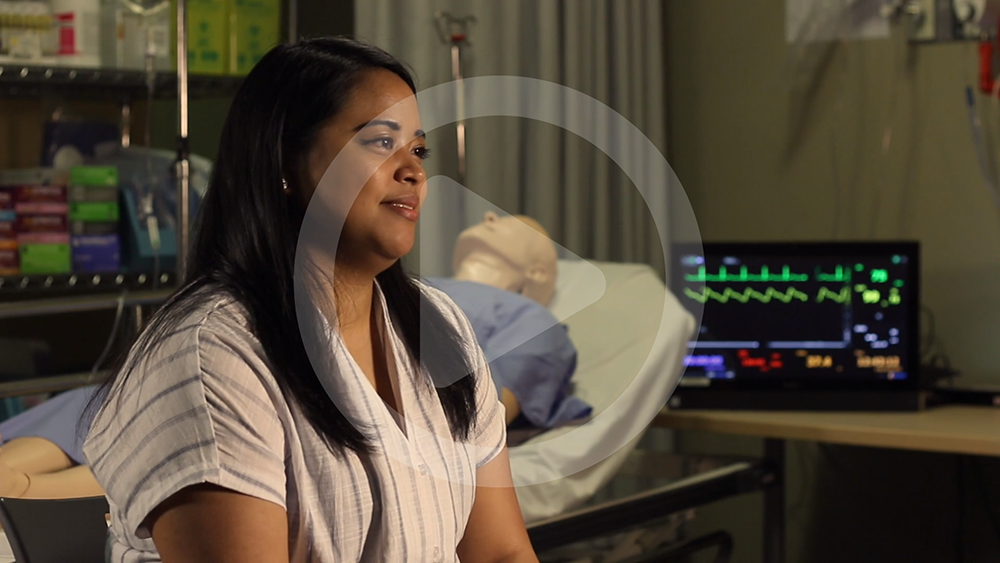
"The instructor interaction in the program was great! Their teaching has given me the specialized knowledge I need to be prepared for the many different aspects of Radiological Technology."
Kelly Hickman,
Class of 2004
Interesting Links
- Canadian Association of Medical Radiation Technologists
- American Society of Radiologic Technologists
Not the right career for you?
Return to Academic Programs
Return to the Medical Radiation Sciences