Future Students

Medical Laboratory Science Advanced Diploma Program


Medical Laboratory Sciences: At A Glance
Credential(s) Earned Advanced Diploma
Program Length 6 semesters over 2.5 years
Delivery Method Full time
Start Date September 2010
Tuition Canadian Tuition Fee
  International Tuition Fee
Application Deadline February 1, 2010
Apply Through OntarioColleges
Program Codes Diploma: MICH ML111

Interested in a career in medical laboratory science?
What is Medical Laboratory Science?
What does a Medical Laboratory Technologist do?

Why become a Medical Laboratory Technologist?
Career Opportunities
How Long Does it Take?
Admission Requirements
Tuition
How do I Apply?
What Will I Learn?
2008/2009 Textbook List
Clinical Sites
Medical Laboratory Science Scholarships
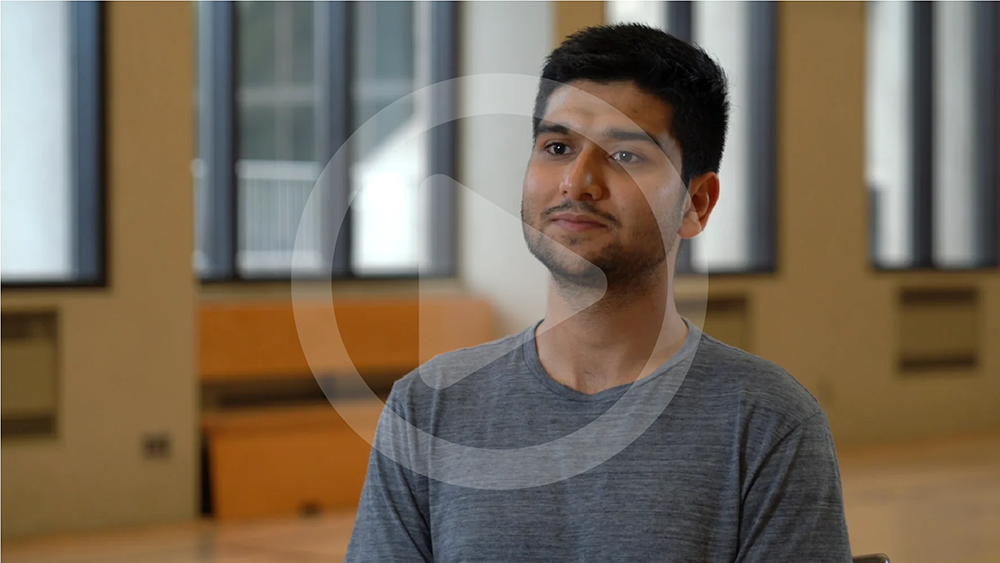
Testimonials
Interesting Links


What is Medical Laboratory Science?

Medical laboratory science combines the use of sophisticated instruments and techniques with the application of theoretical knowledge to perform complex procedures on tissue specimens, blood samples and other body fluids. The tests and procedures that Medical Laboratory Technologists perform provide critical information enabling physicians to diagnose, treat and monitor a patient's condition.

What does a Medical Laboratory Technologist do?

Medical Laboratory Technologists (MLTs) are health professionals who perform laboratory analyses and provide information to physicians. They help physicians to diagnose and treat patients, as well as monitor and prevent disease.

Medical Laboratory Technologists operate a variety of complicated instruments. They must have good motor skills, hand-eye coordination and manual dexterity. In addition to technical skills, they must have a strong attention to detail in order to detect subtle change to the microscopic appearance of blood, tissue and bacterial cells. MLTs must also determine the validity of the results they obtain, which requires analytical and critical thinking. MLTs work in an ever-evolving environment, and on occasion need to design new procedures to reflect the rapid pace of change in their workplace. Whether working alone or as a member of a team, the MLT must be able to manage time efficiently and communicate clearly.

Why become a Medical Laboratory Technologist?

Petri dishes

Medical laboratory technology is a constantly evolving and rewarding career. The lab of today is a far more complicated one than the lab of just ten years ago. As new discoveries advance scientific knowledge, the Technologist's role will continue to change and expand. Even now, we can see the impact of future tests that may be developed for diagnosing such health problems as cancer or genetic disorders.

Variety: Medical Laboratory Technologists perform tests in five different disciplines and have a wide range of career options. Every day brings a different challenge and new problems to solve.

Job Satisfaction: Test results have an immediate impact on the care of critically ill patients. Making a real difference in patients' lives contributes to high levels of job satisfaction among Medical Laboratory Technologists.

Independence: Medical Laboratory Technologists often work independently with minimal supervision. While still a key member of the health care team, MLTs have greater control over their daily routine than many other health care professionals.

Expanding Roles: Demand for faster testing and constant monitoring of patients has taken some tests out of the laboratory to the patient's bedside. This is called "point-of-care" testing. This is an exciting new role for MLTs.

Travel: A Medical Laboratory Technologist with Canadian credentials is welcome in many other countries. If you have a desire to see the world, a career as a MLT will carry you through life's adventures.

Find out what inspired others like yourself to pursue a career in the applied health sciences at www.FutureHealthCareHeroes.com.

For more information about our programs request a copy of our Viewbook today!


Career Opportunities

Medical Laboratory Technologists are the fourth largest group of health care professionals in Ontario, and their career outlook is very positive due to an impending national shortage of MLTs.

While most Medical Laboratory Technologists work in hospitals, physicians' offices, and private laboratories, MLTs also find challenging employment in other areas. From industrial research and public health laboratories to forensic and pharmaceutical laboratories, the MLT's analytical, scientific and technical skills are a valuable asset. Other career options include:

  • Consulting
  • Sales & Marketing
  • Research & Product Development
  • Laboratory Information Systems
  • Supervision/Administration/Management
  • Education
  • Public Health/Infection Control
  • Technical Support
  • Quality Assurance/Total Quality Improvement
  • Forensic Biological Sciences

Health care services are in demand twenty-four hours a day, seven days a week. MLTs often perform shift and weekend work to ensure patients get critical lab results.

Graduates receive an Advanced Diploma in Medical Laboratory Science and may apply for advanced standing at York University and in Ryerson's Bachelor of Health Administration program as well as University of Ontario Institute of Techonology Bachelor of Allied Health Science program. They may also pursue advanced studies at Michener, including:

Clinical Laboratory Quality Manager
Clinical Research Associate
Diagnostic Cytology
Genetics Technology
Sleep Medicine Technology


Medical laboratory science is a regulated health profession. Michener's Medical Laboratory Science program is accredited by the Canadian Medical Association Conjoint Committee on Accreditation, and graduates are eligible to write the national certification examinations conducted by the Canadian Society for Medical Laboratory Sciences (CSMLS). Certification qualifies the graduate for registration with the College of Medical Laboratory Technologists of Ontario (CMLTO), which is a requirement to practice in Ontario.

How long does it take?

picture of vials of fluid samples

Michener's Medical Laboratory Science Advanced Diploma program is a full-time program which consists of 25 months of education over a period of two and one-half year(6 semesters). There is one intake each year, in September, and courses are held at The Michener Institute and affiliated clinical sites.

Program length may differ for International Students. Please see the International Students page for more information.

Start Date

September 2010

Admission Requirements

New Curriculum*

  1. Ontario Secondary School Diploma
  2. Four grade 12 University (U) level courses:
    • Grade 12 English (U)
    • Grade 12 Mathematics (U)
    • Grade 12 Chemistry (U)
    • Grade 12 Biology (U) OR Physics (U)
      (Biology is strongly recommended)
  3. Two University (U) or University/Mixed (U/M) level courses.
  4. Overall average of 75% in all the six courses used to meet the admission requirements.
  5. No grade lower than 70% in the six courses.
 

Old Curriculum

  1. Ontario Secondary School Diploma
  2. A minimum of six OAC courses, including:
    • OAC English
    • OAC Mathematics
    • OAC Chemistry
    • OAC Biology OR Physics
      (Biology is strongly recommended)
  3. Overall average of 75% in the six OAC courses used to meet the admission requirements.
  4. No grade lower than 70% in the six courses.

*Applicants with University Education Courses taken at an accredited University may be used to meet any of the above admission requirements with a minimum grade of 70%.

Applicants for whom English is a second language must provide proof of an English language assessment. Deadline for submission of the English language assessment is February 1st, 2010..

Each program offered by Michener has a fixed size, reflecting labour market demand and clinical education spaces. Therefore enrollment in programs is limited, and admission can be very competitive.

Internationally Educated Applicant

If you are an internationally educated applicant living in Canada as a landed immigrant or permanent resident, please be aware that you must have a full Course by Course evaluation of your transcripts by the World Education Service(WES) or a Comprehensive evaluation from the International Credential Assessment Service(ICAS). A document-to-document evaluation or the general evaluation offered through Ontario Colleges is not sufficient. Documents must be evaluated to Canadian standards. Please note that WES does not do a course by course evaluation of High School documents. In order to have your International Education included in our initial admissions assessment we must receive all your documents by February 1, 2010.

International Students

For Internationally educated students living overseas who wish to come to Canada to study. Please refer to the International Admissions page.

Tuition

The fee policy for Canadian students can found on the Canadian Tuition Fees web page.

The fee policy for International Students can found on the International Student tuition fees web page.

Tuition fees are based on the entire duration of the program of study. For your convenience, these fees have been broken down into three equal payments that can be made annually. Also, each annual fee can be split into two payments which will be due in the summer and late fall of each academic year.

How do I apply?

Step 1. To apply to Michener's Medical Laboratory Science Advanced Diploma program, please submit an application to:

Apply Online at: www.ontariocolleges.ca

OR

ontariocolleges.ca
60 Corporate Court
Guelph, ON
N1G 5J3
Tel: (519) 763-4725 or 1-888-892-2228

Please use the following application codes:
College Code: MICH
Program Code: ML111 Medical Laboratory Science

International students have a separate application process. Please see the International Students page for more information.

Step 2: Candidates must ALSO supply the following to The Michener Institute

All applicants for whom English is a second language must provide proof of an english language assessment.

Step 3:

Top ranked candidates will be mailed a Statement of Intent with an invitation to review, and sign off on important program specific material. This signed Statement of Intent must then be returned to Michener's Admissions Office.

Step 4:

Upon receipt of your signed Statement of Intent you will be asked to come to the campus the week of April, 2010, to participate in the Multiple Mini Interview (MMI), the final phase of our admissions process. What is MMI?


Hospital Tour:

High Speed / Dial Up

Application Deadline

February 2, 2010

70% of physicians' treatments are based on the results of laboratory tests.

For more information on the application process please visit Michener's Admissions page.

What will I learn?

When you enroll in the Medical Laboratory Science program at Michener you will combine theoretical knowledge with hands-on skills development. You will also learn to work independently and in a team as well as in an interprofessional environment, and develop your problem solving and critical thinking skills.

2009/2010 Textbook List

Semester 1 - Fall

AMML110 Gross and Micro-Anatomy
BAIP113 Foundations of Interprofessional Collaboration I
CCML112 Clinical Chemistry I
HEML112 Introduction to Hematology
MIML113 Microbiology and Immunology
PPML110 Normal and Patho-Physiology

Semester 2 - Winter

BAIP124 Foundations of Interprofessional Collaboration ll
HEML120 Hematology and Hemostasis
HIML110 Introduction to Histology
INML120 Clinical Instrumentation
MIML121 Applied Microbiology
VPML120 Specimen Procurement

Semester 3 - Fall

CCML240 Clinical Chemistry II
HEML240 Hematology I
MIML240 Clinical Microbiology & Infectious Diseases I
TSML230 Transfusion Science
RMIP231 Interprofessional Research

Semester 4 - Winter

CCML250 Clinical Chemistry III
HEML250 Hematology II
HIML251 Histotechnology & Special Staining

IPCL251 Interprofessional Collaborative Clinical Simulation
MIML250 Clinical Microbiology & Infectious Diseases II
TSML242 Transfusion Practices

Semester 5 - Summer

CLML251 Clinical Education I
LSIP250 Leadership in Health Care

Semesters 6/7 F/W

CLML361 Clinical Education II

Note: Clinical education encompasses simulation experience at Michener and a placement in medical laboratories with our clinical partners.

Clinical Sites

Current clinical partners include:

Please Note: The list of clinical partners is subject to change. When you accept an offer in the program you also accept to go to any one of our affiliated clinical partners for your clinical placement.

Accreditation

The Medical Laboratory Sciences program is a Canadian Medical Association (CMA) accredited program.

The goal of accreditation is to ensure that programs enable their students to acquire the knowledge, skills and attitudes to function as competent health practitioners for the benefit of all Canadians. Accreditation, an external validation of program quality, is the public recognition that an educational program has met national standards (CMA 2006)

Graduating from an accredited program means that:

  • your education has met national standards (CSMLS Medical Laboratory Science Competency Profile)
  • your program has patient care and student welfare at the forefront
  • your education is relevant to current medical practice
  • your have access to professional registration
  • you have attained the competencies required for entry to practice
  • your education is recognized by employers and the public
  • you have greater mobility as a health science practitioner

Medical Laboratory Science Scholarships & Awards

Interesting Links

Return to Academic Programs

Bookmark and Share