Diagnostic Cytology Graduate Diploma Program
|
|||||||||||||||||||||||||
|
Interested in a career in diagnostic cytology? |
|||||||||||||||||||||||||
What does a Cytotechnologist do?
Cytology is the study of cells. Students in the Diagnostic Cytology program learn to detect and diagnose precancerous cellular changes, many different types of cancer and clinically significant infections.
After successful completion of the national certification exam, a working Cytotechnologist will evaluate microscope slides marking areas showing significant changes. In this profession, a Cytotechnologist may spend up to seven hours per day working at the microscope. Following standardized reporting terminology, the Cytotechnologist will make a diagnosis on each patient case. Abnormal gynecological cases and all non-gynecological cases will be sent to a Pathologist for final diagnosis. Cytotechnologists must be accurate, patient and have strong analytical and problem solving skills to rise to the challenge of making critical diagnoses. Cytotechnologists have limited contact with patients but still interact with other members of the health care team.
Why become a Cytotechnologist?
- Play a key role in the fight against cancer. Working in collaboration with other health professionals, Cytotechnologists provide information used to assess patient health and aid in the diagnosis of cancer.
![]() |
Find out what inspired others like yourself to pursue a career in the applied health sciences at www.FutureHeroes.ca. For more information about our programs request a copy of our Viewbook today! |
Career Opportunities
While most Cytotechnologists work in hospitals, private laboratories or commercial companies they also find challenging employment in other areas. Career advancement areas include education, laboratory management, research, sales, marketing as well as technical consulting .
Medical Laboratory Science which includes Diagnostic Cytology is a regulated health profession.
Michener's Diagnostic Cytology program is accredited by the Canadian Medical Association (CMA) Conjoint Committee on Accreditation and graduates are eligible to write the national certification examination conducted by the Canadian Society for Medical Laboratory Science (CSMLS). Successful completion qualifies the graduate to seek employment across Canada; those wishing to practise in Ontario must also register with the College of Medical Laboratory Technologists of Ontario (CMLTO).
Graduates receive Michener's Graduate Diploma in Diagnostic Cytology and may apply for advanced standing at York University (Atkinson College) and in the Bachelor of Health Administration program at Ryerson University.
How long does it take?
Diagnostic Cytology is a 60 week, intensive full-time program. The theoretical or didactic component is delivered primarily through online education. You will need to study a minimum of 35 - 40 hours each week to complete all the educational requirements in the distance part of the program. Microscope skills are developed in 11, one week live laboratory sessions at Michener. The program also includes 12 weeks simulated clinical at Michener and a 18 week clinical experience in a hospital and or private laboratory.
Start Date
September 2013
Admission Requirements
- Canadian certified Medical Laboratory Technologist (MLT); OR
- Bachelor of Science degree with one (1.0) full university course in Human Anatomy and one (1.0) full university course in Human Physiology with a minimum grade of at least 70%. All body systems must be studied. The course AP601-Anatomy and Physiology for Health Care Professionals, offered through The Michener Institute's Centre for Continuing Professional Education is accepted as an equivalent for both university level credit pre-requisites.
- CGPA will be calculated using entire undergraduate degree. Minimum CGPA of 70% must be attained in order to be considered.
To assess your experience, ALL applicants are asked to fill out an Applicant Experience Checklist and to submit the requested supporting documents along with the form. Please note that this document must be submitted in person or by mail to the Admissions Office at The Michener Institute, 222 St. Patrick St. Room 500, Toronto, ON M5T 1V4.
Admissions to the Diagnostic Cytology program will be determined by an assessment of academic achievement, CGPA (35%), professional and academic experience (15%) and the Multi Mini Interview (50%).
Students must have access to a computer that meets the minimum system requirements and access to the Internet.
Students must meet Michener’s English language proficiency policy. Please view the English Language Proficiency Policy for further information. If you require an English language assessment, please review our English Language Assessment page for specific requirements.. Deadline for submission is February 1st.
Internationally Educated Applicant
If you are an internationally educated applicant living in Canada as a landed immigrant or permanent resident, please be aware that you must have a full Course by Course evaluation of your transcripts by the World Education Service(WES) or a Comprehensive evaluation from the International Credential Assessment Service(ICAS). A document-to-document evaluation or the general evaluation offered through OntarioColleges(OCAS) is not sufficient. Documents must be evaluated to Canadian standards. Please note that WES does not do a course by course evaluation of High School documents. In order to have your International Education included in our initial admissions assessment we must receive all your documents by February 1, 2013
Tuition
The fee policy for Canadian students can be found on the Canadian Tuition Fees web page.
The fee policy for International Students can be found on the International Student tuition fees web page.
How do I apply?
Step 1: Submit the following to the ontariocolleges.ca
- Completed application
- Official academic transcripts and official copies of certification documents. Official notarized copies will also be accepted.
- Non-refundable application fee
Applicants must submit the application to Ontario Colleges at:
OR
ontariocolleges.ca
60 Corporate Court
Guelph, ON
N1G 5J3
Tel: (519) 763-4725 or 1-888-892-2228
Step 2: Candidates must ALSO supply the following to The Michener Institute:
- A list of all relevant continuing education courses (if applicable), including final grades
- Applicants for whom English is a second language must provide proof of an english language assessment
All supporting documentation that is sent directly to Michener should be addressed to the Admissions Department. Click here for Admissions contact information.
Step 3: Following the application process:
- View the laboratory tour video
- high speed, dial up
All applicants will be mailed a Supplementary Application with an invitation to review, and sign off on important program specific material. This signed Supplementary Application must then be returned to Michener's Admissions Office along with the applicable fee.
Step 4:
Top ranked applicants to the Cytology program will be invited to attend the Multiple Mini Interview (MMI), the final phase of our admissions process. What is MMI?
Application Process for International Applicants
All International students (on a study permit/work permit in Canada, or residing overseas) have a separate application process. Please apply directly to The Michener Institute. For more information please refer to the International Admissions page.
Offers Of Admission
Offers of admission will be made to students based on a combination of information received from application step 1 through 4. Any information received late, or not at all, will affect our ability to evaluate your academic and work related credentials and will severely impact on Michener being able to make an offer of admission. After the MMI is completed, offers of admission will be made. Offers of Admission will be mailed during the first week of May, 2013.
For more information on the application process please visit Michener's Admissions page.
International students have a separate application process. Please see the International Students page for more information.
Application Deadline:
February 1, 2013
What will I learn?
You will develop a broad knowledge base and practical skills that will enable an entry level Cytotechnologist to safely prepare specimens for diagnostic interpretation, perform the microscopic interpretation of those specimens, and issue reports according to institutional policies and professional standards. You will also become an integral member of the health care team who will share knowledge that is essential to the diagnosis and treatment of disease and will collaborate with other professionals in providing effective patient care. You will learn to become responsible and accountable for your professional acts and practices according to current standards of practice as well as laws and regulations governing the Cytology profession.
Courses:
Semester 1-Fall:
- MHCY111 - Microanatomy and Histotechnique 1
- PGCY111 - Pathology 1
- GYCY112 - Gynecological Cytology
Semester 2-Winter:
- MHCY121 - Microanatomy and Histotechnique 2
- PGCY121 - Pathology 2
- BAIP125 - Foundations of Interprofessional Collaboration in Advanced Programs
- NGCY121 - Non-gynecological Cytology
Semester 3-Summer:
- CLCY131 - Simulated Clinical Education
Semester 4-Fall:
- CLCY241 - Clinical Education
Clinical Sites
At Michener, you will have the opportunity to apply your knowledge and acquire hands-on experience at a variety of clinical sites. You will work under the supervision of a Registered Cytotechnologist and perform increasingly complex procedures. Clinical placements give you hands-on practice, experience in different work environments, and the opportunity to network with potential employers.
Current clinical partners include:
| Hamilton |
Hamilton Health Sciences, Juravinski Hospital - Hamilton, 711 Concession Street St. Joseph's Healthcare, 50 Charlton Avenue East |
| London | London Health Sciences Centre, University Campus, 339 Windemere Road |
| Ottawa |
Ottawa Hospital, Civic Campus, 1053 Carling Avenue Gamma-Dynacare Medical Laboratories, 750 Peter Morand Crescent |
| Toronto |
Gamma-Dynacare Medical Laboratories, 115 Midair Court, Brampton University Health Network, Toronto General Division, 200 Elizabeth Street Mount Sinai Hospital, 600 University Avenue St. Michael's Hospital, 30 Bond Street Sunnybrook Health Sciences Centre, 2075 Bayview Avenue William Osler Health System Cytopathology Department, 2100 Bovaird Drive East, Rm S.3.452 Brampton, ON L6R 3J7 |
| Windsor | Hotel Dieu Grace Hospital, 1030 Ouellette Avenue |
Please Note: The list of clinical partners is subject to change.
Accreditation
The Diagnostic Cytology program is a Canadian Medical Association (CMA) accredited program.
The goal of accreditation is to ensure that programs enable their students to acquire the knowledge, skills and attitudes to function as competent health practitioners for the benefit of all Canadians. Accreditation, an external validation of program quality, is the public recognition that an educational program has met national standards (CMA 2010)
Graduating from an accredited program means that:
- your education has met national standards
- your program has patient care and student welfare at the forefront
- your education is relevant to current medical practice
- your have access to professional registration
- you have attained the competencies required for entry to practice
- your education is recognized by employers and the public
- you have greater mobility as a health science practitioner
Diagnostic Cytology Scholarships
Dr. Hugh Curry Diagnostic Cytology Scholarship
Zonta Club of Toronto - Diagnostic Cytology Scholarship
General Scholarships and Bursaries
Testimonials
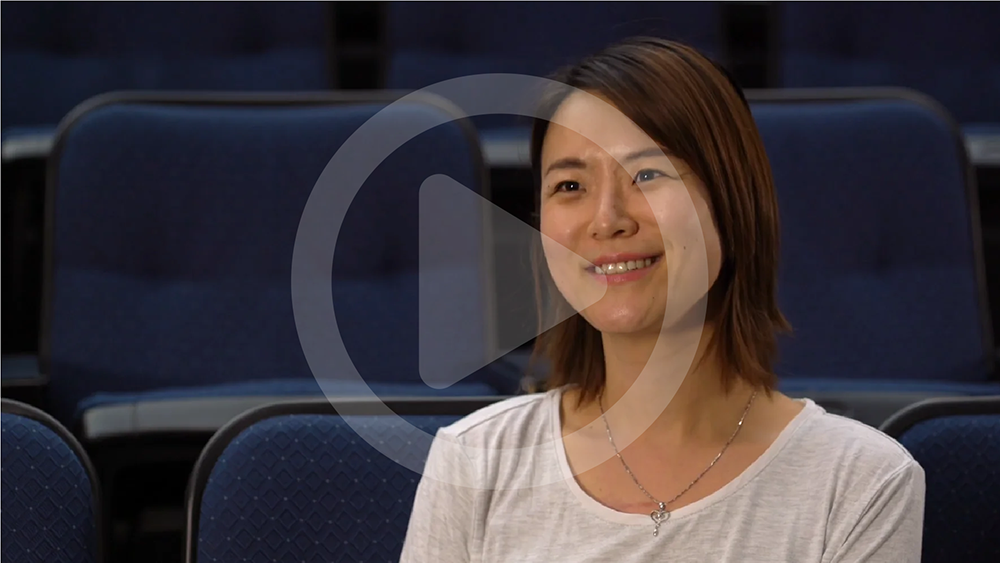
"Michener and the clinical instructors encouraged and motivated me to be successful. This program prepared me very well for the workplace."
Helen Yuehua Cao
Cytology Stuff (Slide Images)
The Bethesda System Website Atlas
College of Medical Laboratory Technologists of Ontario (CMLTO)
Canadian Society for Medical Laboratory Science (CSMLS)
Canadian Society of Cytology
American Society for Clinical Pathology (ASCP)