Respiratory Therapy Advanced Diploma Program
|
|||||||||||||||||||||||
|
Interested in a career in respiratory therapy? |
|||||||||||||||||||||||
What is respiratory therapy?
Breathing - it's one of those things we take for granted. But rising levels of pollution, combined with an aging population, are making breathing difficulties more common. Respiratory Therapists are crucial members of the health care team who treat and monitor patients' cardiopulmonary needs.
What does a Respiratory Therapist do?
Do you like variety? Respiratory Therapists (RT) provide a variety of care for adults, children and newborns. As an RT you would expect to:
- Be an integral part of the cardiac arrest team
- Be leaders in the use of life support equipment
- Use medications, therapies and tests to assist in the diagnosis, treatment and prevention of heart and lung disease
Respiratory Therapists must have good communication skills and be sensitive to patients' physical and psychological needs. They must have critical thinking skills and problem solving skills and be able to function well as a team member. They must be able to work under pressure with critically ill patients, as well as be compassionate with patients suffering from chronic illness.
Why become a Respiratory Therapist?
Job satisfaction. Whether helping to bring a newborn baby, struggling to breathe, back to life or helping an elderly patient with chronic lung disease, Respiratory Therapists make a real difference in patients' lives.
Variety. Respiratory Therapists provide care in many different situations, from therapy for patients with chronic asthma or emphysema, to emergency care for victims of a heart attack, stroke, drowning, or trauma.
![]() |
Find out what inspired others like yourself to pursue a career in the applied health sciences at www.FutureHealthCareHeroes.com. For more information about our programs request a copy of our Viewbook today! |
Career Opportunities
There is a lot of diversity in the field of Respiratory Therapy. Many RT's work in hospital in the: Intensive Care, Delivery Room, Operating Room, Emergency Department or Pulmonary Function Lab. RT's may also bring their skills into the community where they work in home care, long term care or rehabilitation facilities. Career opportunities are also growing in business environments, research and education. Further study is available in such areas as:
- Anesthesia Assistant
- Cardiovascular Perfusion
- Diabetes Educator
- Sleep Medicine
- Bachelor of Health Science (Respiratory Therapy)
- Master of Applied Science (Respiratory Science)
As with many health care fields, aging baby boomers will increase the demand for Respiratory Therapists. Elderly patients suffer most from respiratory ailments and cardiopulmonary diseases such as pneumonia, chronic bronchitis, emphysema, and heart disease. In addition, advances in treating victims of heart attacks, accident victims, and premature infants (many of whom are dependent on a ventilator during part of their treatment) will increase the demand for the services of respiratory care practitioners.
Respiratory therapy is a regulated health profession; to work as a Respiratory Therapist in Ontario, you must be registered with the College of Respiratory Therapists of Ontario (CRTO). The Michener/Dalhousie University Respiratory Therapy diploma program is approved by the CRTO through the Council on Accreditation of Respiratory Therapy Education accreditation program and graduates are eligible to write the national examinations.
How long does it take?
The Respiratory Therapy Program is a full time, entry to practice diploma program which is completed over seven semesters spanning 3 years. There is one student intake each year, in September. The diploma fills all of the requirements for a Diploma in Health Science (Respiratory Therapy).
Program length may differ for International Students. Please see the International Students page for more information.
Start Date
September 2010
Admission Requirements **
High School Applicants *
- Ontario Secondary School Diploma.
- Four grade 12 University (U) level courses:
- Grade 12 English (U)
- Grade 12 Mathematics (U)
- Grade 12 Biology (U)
- Grade 12 Chemistry (U)
- Two University (U) or University/Mixed (U/M) level courses.
- Overall average of 75% in all the six courses used to meet the admission requirements.
- No grade lower than 70% in the six prerequisites.
*Note: If using the old curriculum to determine admission requirements U level courses can be substituted if necessary.
** Note: College level programs/courses do not meet prerequisite requirements.
Applicants With Previous Post Secondary Studies
- Completion of prerequisite courses as outlined for high school applicants. If these courses were not taken as part of post secondary study evidence must be submitted that they were taken in high school.
- Evidence of all post secondary education must be disclosed.
- No grade lower than C (63 - 65%) in prerequisite courses.
Applicants for whom English is a second language must provide proof of an english language assessment. Deadline for submission is February 1st.
Each program offered by Michener has a fixed size, reflecting labour market demand and clinical education spaces, therefore enrollment in programs is limited, and admission can be very competitive.
Internationally Educated Applicant
If you are an internationally educated applicant living in Canada as a landed immigrant or permanent resident, please be aware that you must have a full Course by Course evaluation of your transcripts. OCAS will perform this service upon your request. Documents must be evaluated to Candian standards. In order to have your International Education included in our initial admissions assessment we must receive all your documents by February 1, 2010
International Students
For Internationally educated students living overseas who wish to come to Canada to study. Please refer to the International Admissions page.
Tuition
The fee policy for Canadian students can found on the Canadian Tuition Fees web page.
The fee policy for International Students can found on the International Student tuition fees web page.
Tuition fees are based on the entire duration of the program of study. For your convenience, these fees have been broken down into three equal payments that can be made annually. Also, each annual fee can be split into two payments which will be due in the summer and late fall of each academic year.
How do I apply?
Step 1: To apply to the Michener Respiratory Therapy Diploma Program, please complete the following.:
|
Apply Online at: www.ontariocolleges.ca
|
Please use the following application codes: |
International students have a separate application process. Please see the International Students page for more information.
Step 2: Candidates must ALSO supply the following to The Michener Institute
- All applicants for whom English is a second language must provide proof of an english language assessment.
Step 3:
- Top ranked candidates will be mailed a Statement of Intent with an invitation to review, and sign off on important program specific material. This signed Statement of Intent must then be returned to Michener's Admissions Office.
Step 4:
- Upon receipt of your signed Statement of Intent you will be asked to come to the campus the week of April 27, 2009, to participate in the Multiple Mini Interview (MMI), the final phase of our admissions process.
What is MMI?
Offers Of Admission
Offers of admission will be made to students based on a combination of information received from application step 1 through 4. Any information received late, or not at all, will affect our ability to evaluate your academic and work related credentials and will severely impact on Michener being able to make an offer of admission. After the MMI is completed, offers of admission will be made. Offers of Admission will be mailed during the first week of May, 2009.
For more information on the application process please visit Michener's Admissions page.
International students have a separate application process. Please see the International Students page for more information.
Application Deadline
February 1, 2010
For more information on the application process please visit Michener's Admissions page.
What will I learn?
When you enroll in the Respiratory Therapy program you will study a variety of subjects, including cardiopulmonary diagnostics and rehabilitation, the physics and dynamics of breathing, pharmacological therapies, adult, neonatal and pediatric critical care.
Curriculum is currently under review. Check back regularly for course updates and links.
|
Year1: Semester 1 - Fall |
Semester 2 - Winter TBD |
|
Year 2: Semester 3 - Fall TBD |
Semester 4 - Winter TBD |
|
Semester 5 - Summer TBD |
|
|
Year 3 Semester 6 - Fall TBD |
Semester 7 - Winter TBD |
Clinical Sites
Clinical placements give you hands-on practice, experience in different work environments, and the opportunity to network with potential employers, including:
- Hamilton Health Sciences, Hamilton
- Hospital for Sick Children, Toronto
- Medigas, Toronto
- Mount Sinai Hospital, Toronto
- North York General Hospital, Toronto
- Professional Respiratory Home Care Services, Mississauga
- The Scarborough Hospital, General & Grace Division, Scarborough
- St. Joseph's Health Centre, Toronto
- St. Joseph's Hospital, Hamilton
- St. Michael's Hospital, Toronto
- Women's College Hospital
- Sunnybrook Health Sciences Centre, Toronto
- Trillium Health Centre, Mississauga Site, Mississauga
- University Health Network, General Division, Toronto
- University Health Network, Western Division, Toronto
- West Park Healthcare Centre, Toronto
- William Osler Health Science Centre, Brampton Civic Site, Brampton
- Toronto East General Hospital, Toronto
- Royal Victoria Hospital, Barrie
Accreditation
The Respiratory Therapy program is a CoARTE accredited program. CoARTE accreditation
The goal of accreditation is to ensure that programs enable their students to acquire the knowledge, skills and attitudes to function as competent health practitioners for the benefit of all Canadians. Accreditation, an external validation of program quality, is the public recognition that an educational program has met national standards.
Graduating from an accredited program means that:
- your education has met national standards
- your program has patient care and student welfare at the forefront
- your education is relevant to current healthcare practice
- you have access to professional registration
- you have attained the competencies required for entry to practice
- your education is recognized by employers and the public
- you have greater mobility as a health science practitioner
Respiratory Therapy Scholarships
- A.W. Conn Respiratory Therapy Scholarship
- ProResp Respiratory Therapy Graduating Student Scholarship of Excellence
- Tyco Health Care Scholarship
- General Scholarships and Bursaries
- Dr. Winston Isaac Scholarship
- ProResp Respiratory Therapy Graduating Student Scholarship of Excellence
Testimonials
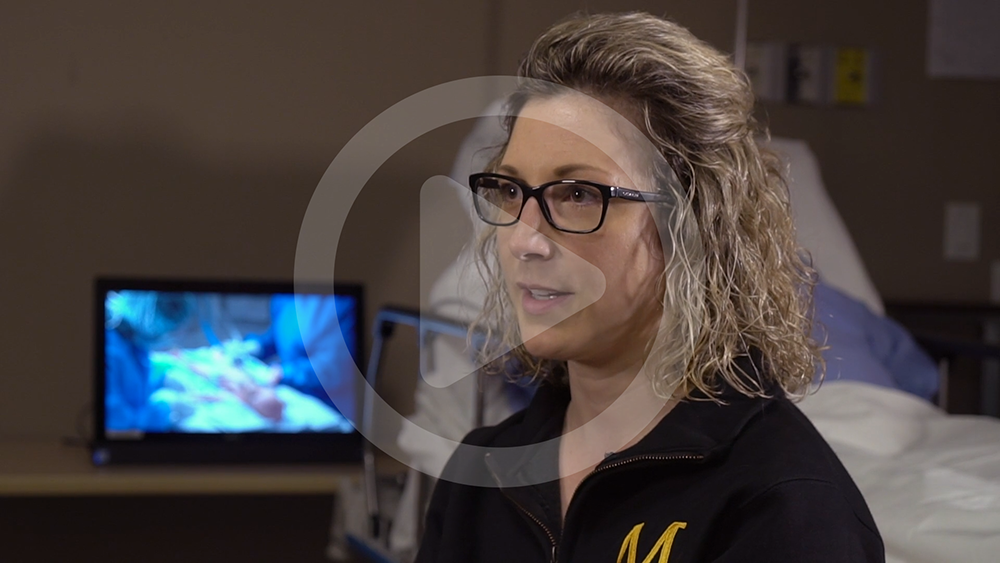
"The best thing about the Respiratory Therapy program is that it combines theory and clinical practice over the course of three years, so that you will be highly skilled and prepared to enter the health work place."
Julie Yarascavitch
Interesting Links
- Respiratory Therapy Society of Ontario (RTSO)
- Ontario Respiratory Care Society (ORCS)
- College of Respiratory Therapists of Ontario (CRTO)
- Canadian Society of Respiratory Therapists
- American Association for Respiratory Care
- Canadian Institute for Health Information: Respiratory Therapist