Future Students

Nuclear Medicine Degree and Advanced Diploma Program


At A Glance
Credential(s) Earned Degree & Advanced Diploma
Program Length 3 years
Delivery Method Full Time
Start Date September 2012
Approximate Tuition* $6,160/yr
Application Deadline March 1, 2012
Apply Through OUAC
Program Code TRN
  Download the 2011 Viewbook PDF
   
* Tuition fees are based on the 2011-2012 figures and are subject to change for the 2012-2013 academic year.

Interested in a career in nuclear medicine?
Frequently Asked Questions
Why Medical Radiation Science?
What is nuclear medicine?
What does a Nuclear Medicine Technologist do?
Why become a Nuclear Medicine Technologist?
Career Opportunities
How long does it take?
Admission requirements
Tuition
How do I apply?
What will I learn?
Textbook List
Clinical Sites
Accreditation
Nuclear Medicine Scholarships
Testimonials
Interesting Links
Open House - January 16, 2012


What is nuclear medicine?

According to the Society of Nuclear Medicine, "Nuclear medicine imaging documents organ function and structure, in contrast to diagnostic radiology, which is based upon anatomy. It is a way to gather medical information that may otherwise be unavailable, require surgery, or necessitate more expensive diagnostic tests."

It uses substances, called radiopharmaceuticals, that are attracted to specific organs, bones, or tissues and which can be inhaled, injected or taken orally. Radiopharmaceuticals emit gamma rays that can be detected externally by special types of cameras; these cameras work in conjunction with computer systems to convert the gamma rays into images and information about the area of the body being examined.

Images of the tissue or organ are typically acquired from different angles, allowing the computer system to generate cross-sectional views. These images are then used to evaluate brain, thyroid, heart, lung and kidney disorders, to name just a few. They can also assess tumour location and size, both before and after treatment. Certain radiopharmaceuticals in larger quantities are also used to treat overactive endocrine glands and tumours.

Nuclear medicine can identify abnormalities early in the progression of a disease - long before some medical problems are apparent with other diagnostic tests. This allows a disease to be treated early in its course when there may be a more successful prognosis.

Examples of Nuclear Medicine:

  • Bone scans examine tumors, metabolic disease and orthopedic injuries
  • Heart scans evaluate blood flow to the heart muscle, measure cardiac function, and determine the extent of damage after a heart attack
  • Liver and gallbladder scans evaluate organ function and detect disease
  • Brain scans investigate blood circulation and cerebral structure
  • Renal imaging gives sensitive diagnostic information about kidney function
  • Ovarian, prostate, breast, colorectal, lung, and lymphoma are just some of the many cancers that are scanned. Imaging detects tumors and determines the severity (staging) of disease, thus assisting in planning treatment
  • Positron Emission Tomography, or P.E.T. scanning, is a powerful new Nuclear Medicine technique which uses special tracers and cameras to give extraordinary three-dimensional diagnostic information about the entire body
  • Positron Emission Tomography (PET scanning) accurately detects infection in 96% of patients.

What does a Nuclear Medicine Technologist do?

  • Prepares and administers radiopharmaceuticals
  • Images different organs and bodily structures
  • Uses sophisticated computers to process data and enhance images
  • Analyzes biological specimens in the laboratory
  • Works closely with doctors, patients and other members of the health care team
     

Why become a Nuclear Medicine Technologist?

  • Nuclear Medicine Technologists work closely with doctors, patients and other members of the health care team. Ranging from cardiology to psychiatry, nuclear medicine images and treatments are used by a wide array of medical specialties.
  • Nuclear Medicine Technology can save patients the pain and trauma associated with investigative surgery. The detailed images that nuclear medicine scans produce can determine the location and size of tumours or diseases without surgery.

SNM Brings Molecular Imaging to the Public on Times Square Jumbotron

Find out what inspired others like yourself to pursue a career in the applied health sciences at www.FutureHealthCareHeroes.com.

For more information about our programs request a copy of our Viewbook today!

Download the 2011 Viewbook PDF


Career Opportunities

Nuclear Medicine Technologists are employed in a variety of clinical environments, including community or teaching hospitals, private clinics, research institutes, and public health institutions. Other professional options include:

  • Supervision/Administration/Management
  • Sales & Marketing
  • Research
  • Education
  • Government
  • Technical Specializations (PET)
  • Radiation Safety

Graduates are eligible to write the national certification examination conducted by the Canadian Association of Medical Radiation Technologists (CAMRT). Certification qualifies graduates to work across Canada and allows them to register with the College of Medical Radiation Technologists of Ontario (CMRTO).

Graduates are also eligible to write the certification exam conducted by the Nuclear Medicine Technology Certification Board (NMTCB) in the United States, qualifying them for employment there.

Graduates earn a BSc in Medical Radiation Sciences from the University of Toronto and a Diploma in Nuclear Medicine Technology from The Michener Institute and may pursue advanced studies at Michener, including:

How long does it take?

The joint University of Toronto/Michener Nuclear Medicine Degree/Advanced Diploma program is a three-year full time program. There is one intake each year, in September, and courses are held at both UofT's downtown campus and at Michener.

Start Date

September 2012

Admission Requirements

Nuclear medicine is a second entry program - you must have at least one year of university education to apply. If you have a Master's or PhD your undergraduate courses will still be reviewed, as the prerequisites ensure that each student has the background necessary to be successful in the program.

  1. A minimum of one year (5 credits) of university education, with one full course in each of:
    • Biology
    • Mathematics (Calculus or Linear Algebra)
    • Physics
  2. A minimum cumulative Grade Point Average (GPA) of B-, and a minimum grade of C- in each of the required courses
  3. Grade 12 U-level Chemistry (previously OAC Chemistry)

Because all lectures, seminars and clinical laboratory sessions and activities are conducted in English, it is essential that students have an adequate knowledge of written and spoken English. Applicants for whom English is a second language must provide proof of an English language assessment. Information regarding when proof of English facility must be provided and, if so, the acceptable tests to consider and the required scores can be found in the booklet entitled "The University of Toronto Next Steps: Your Guide to the Application Process" that is sent to all applicants in the acknowledgment package or visit the UofT web site. It is the responsibility of the applicant to make all the necessary arrangements to take this test and to ensure that the test results are received no later than March 31.

The following tests and scores are acceptable proof of English facility:

  1. TOEFL (UofT Institution code 0982-00 and Michener Institution code 0323-00)
    (a) Internet-based test, minimum requirement is a total score of 100 + 22 on Writing section
    (b) Computer-based test, minimum requirement is a total score of 250 + 5.0 on Essay
    (c) Paper-based test, minimum requirement is a total score of 600 + 5.0 on TWE
  2. IELTS
    Minimum requirement is an overall band of 6.5 with no band below 6.0
  3. MELAB
    Minimum requirement is an overall score of 85, with no part score below 80
  4. COPE
    Minimum requirement is an overall score of 5, with 2 in Writing, and 1 or 2 in Reading and Listening sections

You must submit your results to both Michener and the University of Toronto.

Tuition

  Domestic Student Fee* International Student Fee**
Academic fee $6,160.00 $22,162.00
Non-academic incidental fee $1,736.50 $1,736.50
Health Insurance Premium Not applicable $684.00

* Tuition fees are based on the 2011-2012 figures and are subject to change for the 2012-2013 academic year.

** International tuition fees are based on the 2011-2012 figures and are subject to change for the 2012-2013 academic year.

How do I apply?

UofT Students

Non-UofT Students

  • Apply online to Ontario Universities' Application Centre (OUAC)
  • The Medical Radiation Sciences B.Sc. is listed under the University of Toronto section entitled "second and higher year programs requiring more than OAC level". The code for the Nuclear Medicine program is TRN.

Out of Province Applicants

  • Students from non-Ontario universities are eligible to apply for admission. Applicants attending non-Canadian universities must have completed the equivalent of at least one year's undergraduate education at an Ontario university to qualify for consideration. A higher tuition fee will be levied on individuals who are not Canadian citizens or landed immigrants.

Please apply to ONLY one discipline. Applicants will have the opportunity to apply to the other disciplines (Radiation Therapy or Radiological Technology) later by completing the Medical Radiation Sciences Program Choice Form sent by the Medical Radiation Sciences Office as part of the acknowledgement package.

Program Information and Application Forms

Applicants seeking admission to the first year of the joint B.Sc./Diploma Nuclear Medicine program may obtain information and applications from the following locations:

  1. Medical Radiation Sciences Program, 222 St. Patrick Street, Toronto, Ontario M5T 1V4 Telephone (416) 596-3117 or toll free 1-800-387-9066; Fax (416) 596-3122; E-mail radsciinfo@michener.ca
  2. Admissions and Awards, University of Toronto, 315 Bloor Street West, Toronto, Ontario M5S 1A3; Telephone (416) 978-2190; www.adm.utoronto.ca

Application Process Timelines

Application Deadline

March 1, 2012

Multiple Mini Interview (MMI) Dates for 2012 intake:
April 23 - 27, 2012

What will I learn?

When you enroll in the Nuclear Medicine Technology program you will have the opportunity to gain hands-on experience with sophisticated technological tools, while learning to work closely with doctors and patients.

Semester 1 - Fall

Foundations of Interprofessional Collaboration

Introduction to Patient Care in the Medical Radiation Sciences

Anatomy

Nuclear Medicine Physics and Radiobiology

Nuclear Medicine Instrumentation I

Radiopharmacy

Semester 2 - Winter

Foundations of Interprofessional Collaboration II

Special Topics in Patient Care I

Physiology

Relational Anatomy (x-sectional)

Nuclear Medicine Instrumentation II

Fundamentals of Nuclear Medicine Practice

Semester 3 - Spring/Summer

Introduction to Clinical Nuclear Medicine

Selective I

Semester 4 - Fall

Introduction to Research

Special Topics in Patient Care II

Principles of Pharmacology for Medical Radiation Sciences

Nuclear Medicine Methodology I

Nuclear Medicine Methodology II

Integrated C.T. Imaging Theory and Practice I

Semester 5 - Winter

Clinical Behavioural Science

Special Topics in Patient Care III

Interprofessional Collaborative Clinical Simulation

Nuclear Medicine Methodology III

Nuclear Medicine Methodology IV

Current Topics in Nuclear Medicine & Molecular Imaging

Semester 6 - Spring/Summer

Leadership in Health Care

Health Care Systems

Simulated Clinical Experience: Nuclear Medicine

Selective II


Semester 7 - Fall

Clinical Nuclear Medicine II (15 weeks)

Research Methods II (13 weeks)

OR

Clinical Project (13 weeks)

Semester 8 - Winter

Clinical Nuclear Medicine III (15 weeks)

Research Methods II (13 weeks)

OR

Selective III (13 weeks)

Note: The above curriculum is subject to change. Clinical education may be scheduled as simulation experience at Michener or as placement in clinical environments with our clinical partners.

Selectives give you some expertise in specialized fields of practice such as MRI, ultrasound, health education, specialized radiation therapy methods, computer-assisted image analysis, and may allow you to fast track certain advanced level programs.

2010/2011 Textbook List

Clinical Sites

Clinical placements give you hands-on practice, experience in different work environments, and the opportunity to network with potential employers. Applicants, when confirming acceptance into their program, agree to attend any placement site that is assigned to them. Depending on the program, these placements may be anywhere in Ontario and for some programs, may be across Canada. The following list captures our 2010/2011 clinical partners. Please note, this list is subject to change and may not be available at the time you are provided with a clinical placement.

Accreditation

The Nuclear Medicine program is accredited by the Canadian Medical Association (CMA).

The goal of accreditation is to ensure that programs enable their students to acquire the knowledge, skills and attitudes to function as competent health practitioners for the benefit of all Canadians. Accreditation, an external validation of program quality, is the public recognition that an educational program has met national standards (CMA 2006)

Graduating from an accredited program means that:

  • your education has met national standards
  • your program has patient care and student welfare at the forefront
  • your education is relevant to current medical practice
  • your have access to professional registration
  • you have attained the competencies required for entry to practice
  • your education is recognized by employers and the public
  • you have greater mobility as a health science practitioner

Nuclear Medicine Scholarships

Alexandra Mitchell Prudencio Scholarship
Dr. Dan Wilmot Imaging Scholarship
Dr. Fred Heagy Bursary Fund
Dr. J.E. Prince Nuclear Medicine Scholarship
MDS Inc. Medical Laboratory Science Scholarship
General Scholarships and Bursaries
U of T Scholarships

Testimonials

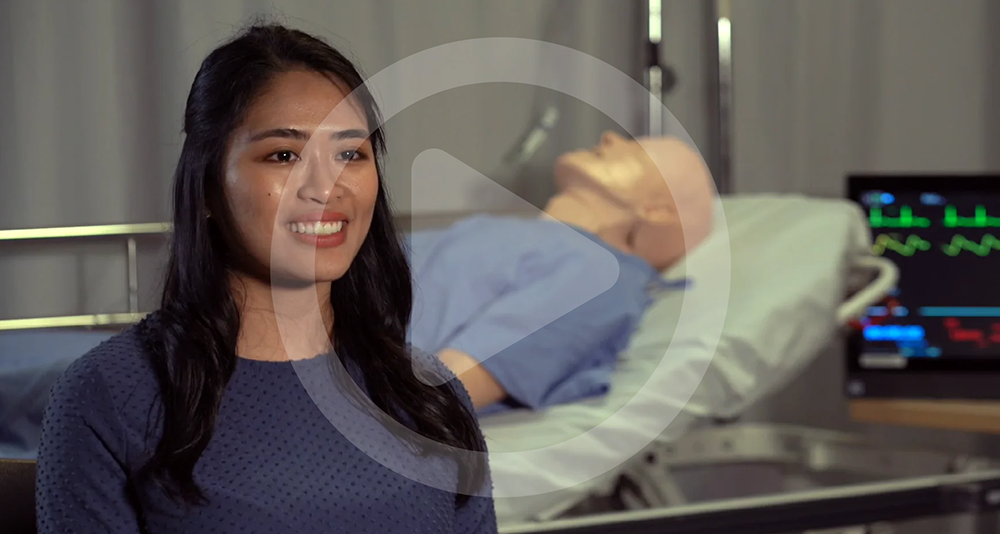
"I was first exposed to the word “Nuclear Medicine” from my work experience at a medical clinic. I saw quite a number of requisitions with “Nuclear Medicine” checked off. Driven by curiosity, I did some research and discovered Nuclear Medicine is a fascinating field of medical imaging, which allows you to see both the anatomical structures and physiological functions of the human body. All this can be achieved non-invasively just by administering a small amount of radioactive substance and operating a cutting edge technology like the dual-head gamma camera."
Andrew Sulistijo
Nuclear Medicine, Class of 2012

"As part of my research into Nuclear Medicine as a career choice, I attended the information sessions at Michener to learn more about the profession and the education required. I was impressed by what I saw and heard from the faculty and students, and this reinforced my decision to enter the field. I also spoke to a Nuclear Medicine technologist who had graduated from Michener, and he spoke highly of the education he had received here. The Michener Institute also had a great reputation and a smaller learning environment than I was accustomed to from my undergraduate education. All these factors made me believe that I would receive a quality education here, and this contributed to my decision to attend Michener."
Linda Sarju
Nuclear Medicine, Class of 2012

Images produced by Nuclear Medicine Technologists are not just static 'pictures'; they can capture the real-time functioning of internal organs and reduce the need for investigative surgery!

Interesting Links

Not the right career for you?
Compare Michener Programs
Return to Academic Programs
Return to the Medical Radiation Sciences

Bookmark and Share