Ultrasound Program

Program at a glance:
Credential Earned: Advanced Diploma
Program Length: 5 Semesters across 2 years (Full-time)
Program Delivery: On site with online components
Start Date: September 2024
Application Deadline: February 1, 2024
Program Code: MICH US222
About the Program
Compassionate patient care, from the inside out
The Ultrasound program at Michener is a post graduate accredited program and offers a combination of didactic, simulated, and clinical components. Clinical sites are located in Ontario and throughout Canada.
During the clinical year, students attempt the Canadian Clinical Skills Assessment (CCSA), as per Sonography Canada. Students are required to pass the CCSA’s in order to successfully complete the ultrasound program and move forward with the credentialing process of becoming a Generalist Sonographer.
Ultrasound graduates are eligible to write the national credentialing examinations for the Generalist Sonographer (core/abdominal/superficial structures, vascular for generalist, obstetrics and gynecology) conducted by Sonography Canada. Upon successful completion of the credentialing exams, the students can apply for registration with the College of Medical Radiation and Imaging Technologists of Ontario (CMRITO) allowing them to practice within the province of Ontario. Graduates are also able to work in all provinces across Canada with the Generalist Credential from Sonography Canada, provided they meet the provincial guidelines.
Michener Ultrasound graduates additionally are eligible to attempt the American Registry of Diagnostic Medical Sonographer (ARDMS) certification exams (SPI/abdominal /superficial structures and obstetrics and gynecology). Successful certification from ARDMS allows graduates to work in the USA (please refer to individual state requirements).
The primary focus of the ultrasound program is to provide optimal, relevant, current knowledge and ultrasound scanning skills following the Sonography Canada National Competency Profile such that the graduating student can be competent and provide safe, ethical, compassionate, and competent care to each patient.
The Ultrasound program is accredited by Accreditation Canada . Accreditation is a quality improvement process that ensures educational programs meet national standards and that students acquire the knowledge, skills, and competencies for safe and effective care at entry to practice.
Michener also offers a Bridging program for internationally educated Ultrasound professionals. For more information, please visit the Bridging Ultrasound Scanning Evaluation webpage.
“The faculty were very supportive and flexible in response to the changing conditions of the COVID-19 pandemic to ensure that we could be successful.”
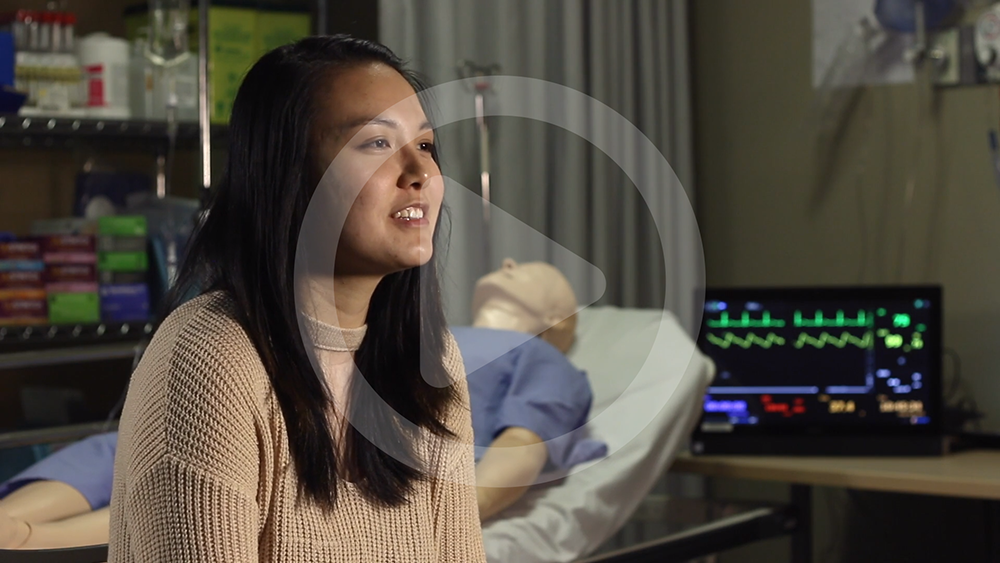
Take an Ultrasound Virtual Tour
Apply now on ontariocolleges.ca
Admission Requirements
About the Profession
Diagnostic medical sonography (ultrasound) is an important medical diagnostic imaging technology and is an integral part of the diagnostic process in all health care institutions in Canada.
Ultrasound uses high-frequency sound waves to display real-time images of the soft tissue structures in the human body such as the abdomen, pelvis (male and female), breast, thyroid, musculature and vessels. It also plays a large role in assessing fetal development, well-being and fetal anatomy and can also be used to assess the viability of different types of organ transplants by assessing the vascular flow.
As a sonographer, you will use this technology to assess the specific anatomy (as requested by a physician) and differentiate between normal and abnormal anatomy. In the case of vessels, you will use Doppler ultrasound to assess vascular flow abnormalities. Once the examination is complete you will write a technical report of your findings, this along with the images you have recorded will be analyzed by the Radiologist who will indicate the differential diagnosis and any required follow-ups. Throughout your interaction with the patient, you must provide ethical, professional, non-judgmental, and compassionate care.
You will work with an interdisciplinary imaging team consisting of radiologists and other health care providers in a diagnostic medical imaging department.
Future career opportunities include (but are not limited to) working in hospitals, private clinics, research, management, applications, sales or in education.
Graduates can specialize in the Magnetic Resonance Imaging (MRI) or Imaging Informatics programs at Michener. They may also apply for advanced standing at Ryerson University or apply for a bachelor’s degree in Applied Sciences (Medical Imaging) or master’s degree in Applied Sciences (Medical Ultrasound) through distance learning at Charles Sturt University .
What Will I Study?
The learning outcomes and objectives of the Ultrasound curriculum are directly related to the National Competency Profiles (NCP) Version 6.1 by Sonography Canada for the Generalist Profile.
Acquisition of academic knowledge, scanning skills, patient care and professionalism skills are necessary for an entry level Generalist Sonographer as defined by Sonography Canada National Competency Profile (Abdomen, Superficial Structures, Vascular for generalist, Gynecology and Obstetrics) including:
- Development of patient care skills in a simulated and clinical environment
- Sonographic knowledge of cross sectional, relational, normal and pathological processes of the abdomen, superficial structures, vessels, musculoskeletal, obstetrics and gynecology related to the adult human
- Development and Evaluation of scanning skills in a simulated lab environment utilizing peer to peer scanning and low and high-fidelity phantoms for more sensitive exams such as breast, transvaginal and obstetrics ultrasound.
- Clinical placement at a hospital and or clinic in Canada using the Sonography Canada Clinical Skills Assessment (CCSA) tool as a graduating criterion
- Development of skills for effective communication and collaboration to enhance Interprofessional Collaboration in Health Care
- Development of critical thinking skills essential for working in a health care environment
For detailed course descriptions, please visit the Ultrasound Curriculum page.
Clinical Education
Length: 30 weeks
Start: September
End: April
You will be assigned to clinical placement site(s) through Michener’s Office for Clinical Education. This process begins with an information session in the first semester of your program.
As clinical education is a major component of all Michener programs, our affiliated clinical sites are integral to your education. They include teaching and community hospitals and private clinics in Ontario and other provinces. Working closely under the supervision of Canadian credentialed Generalist Sonographers, you will have the opportunity to integrate academic knowledge and scanning skills into practice during the clinical phase of your program. Clinical placements give you hands-on experience in work environments and the opportunity to network with potential employers.
For more information about Clinical Education, please see Michener’s Clinical Education Model page.
Additional Resources
- Canadian National Society: Sonography Canada
- Canadian Provincial Society: Ontario Association of Medical Radiation Sciences (OAMRS)
- Ontario Regulatory College: College of Medical Radiation and Imaging Technologists of Ontario (CMRITO)
Certification Exams:
- Canadian Practice: Sonography Canada
- American Practice: The American Registry for Diagnostic Medical Sonography (ARDMS)
Textbooks
Scholarship & Bursaries
Tuition